

Encryption is one of the most talked-about topics in video communications, especially as organizations face increasing pressure to protect sensitive conversations, customer data, and operational workflows.
At the same time, it is also one of the most misunderstood.
Terms like end-to-end encryption (E2EE), encrypted meetings, and secure communications are often used interchangeably, even though they solve different problems.
The reality is straightforward: encryption matters. But encryption alone does not make a meeting secure.
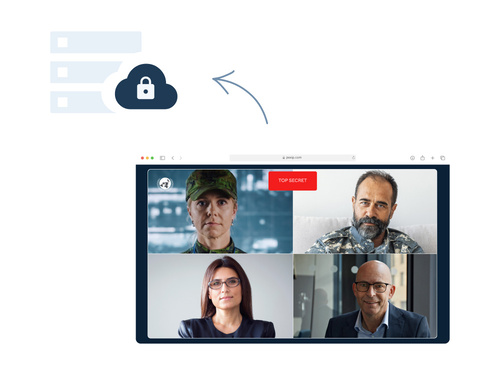
For organizations handling sensitive communication, such as healthcare consultations, legal hearings, government discussions, and defense coordination, security depends on more than protecting media streams. It depends on how identities are verified, how metadata is handled, how access is controlled, and where the infrastructure itself is deployed.
Encryption is part of secure meetings, but it is not the whole picture.
What encryption is used in video conferencing?
Most video conferencing platforms use transport encryption by default, typically TLS for signaling and SRTP for media. Some also offer end-to-end encryption (E2EE), but that comes with trade-offs. Understanding the difference matters because encrypted does not always mean private, compliant, or fully secure.
What does encryption protect in video conferencing?
At its core, encryption protects two essential security principles: confidentiality and integrity.
Confidentiality ensures that only authorized people can access your data. In a video meeting, that means protecting conversations, signaling traffic, credentials, and other sensitive information from unauthorized access.
Integrity ensures that data remains accurate and unchanged. Encryption helps preserve integrity by making unauthorized changes easier to detect through authenticated encryption and digital signatures.
Together with availability, these form the C-I-A triad of modern information security:
- Confidentiality
- Integrity
- Availability
Availability matters because secure communication is only useful if authorized people can access it when they need it.
How does video conferencing encryption work?
Video conferencing encryption works by protecting different parts of the communication path. TLS encrypts signaling data between the user and the server. SRTP encrypts audio and video streams. DTLS helps exchange encryption keys securely. Together, these layers protect data in transit, but they do not automatically make a meeting end-to-end encrypted.
Encryption in transit vs at rest in video conferencing
Data exists in three different states, and each requires protection.
Data in transit is data moving between systems, such as signaling traffic, media streams, and administrative connections. This is what most people think of when they think about encryption
Data at rest is stored data, including user credentials, logs, and configuration data. Pexip protects stored sensitive data through strong hashing and encryption mechanisms, including Argon2 where appropriate.
Data in process is data being actively used by system memory and processors. Hardware-level protections like Intel Total Memory Encryption and AMD Secure Memory Encryption help protect this stage.
Protecting all three matters because sensitive communication moves through all three.
How Pexip encrypts meetings
Pexip uses a layered encryption model as part of a defense-in-depth architecture.
Rather than relying on a single encryption mechanism, Pexip applies protection across multiple layers of communication. Network traffic between nodes is protected with IPsecv3. Signaling and browser connections use TLS v1.2+ and DTLS v1.2. Application-layer symmetric protections include HTTPS, SRTP, and SSH. These protocols work in concert to provide a multi-faceted “defense-in-depth” (DID) approach to encrypting your data.
This layered model matters because secure meetings also depend on protecting signaling, administration, and infrastructure communications. And they still need to interoperate with the platforms organizations already use.
Pexip’s encryption standards
Pexip is designed to support high-security environments without compromising interoperability.
Data flowing between Pexip conferencing nodes uses X.509v3 certificates, IPsec ESP transport mode, AES-256 GCM, and 4096-bit Diffie-Hellman to protect internal traffic.
Signaling traffic is encrypted using TLS 1.2+ across supported protocols including:
- SIP
- WebRTC
- HTTPS
- Microsoft Teams CVI
- RTMPS
- LDAP
Media encryption uses Secure Real-time Transport Protocol (SRTP). Depending on the endpoint and protocol, this includes AES-256 GCM, AES-128 GCM, or AES-128 CTR. For WebRTC sessions, keys are negotiated using DTLS-SRTP, while SIP sessions use SDES-SRTP.
This gives organizations strong encryption while maintaining compatibility across ecosystems like Microsoft Teams, SIP environments, and browser-based meetings.
TLS vs end-to-end encryption in video conferencing
TLS and end-to-end encryption solve different problems. TLS protects data between your device and the meeting server. End-to-end encryption protects data between participants, preventing the server from accessing content.
Most enterprise video platforms use transport encryption because it supports recording, transcription, interoperability, and compliance workflows. True E2EE improves privacy, but it limits server-side features.
Built for regulated environments
For many organizations, encryption standards are not optional. They are part of regulatory and operational requirements.
FIPS Compliance Mode supports cryptographic modules validated under FIPS 140-3, the latest U.S. federal standard for cryptographic security.
That matters for organizations operating in government, defense, healthcare, and critical infrastructure, where independently validated cryptographic standards are often required.
It also provides assurance that encryption is implemented according to recognized standards from organizations like National Institute of Standards and Technology (US) and the National Cyber Security Centre (UK).
Pexip is also preparing for post-quantum cryptography requirements and will add support as the necessary standards, platform components, and endpoint technologies, including WebRTC browsers, become ready.
Encryption is not enough
True security demands control that goes beyond encryption. Encryption helps protect the meeting content in transit, but secure video conferencing also depends on strong authentication, access controls, audit logging, and control over encryption keys.
A secure meeting environment needs to answer broader questions:
- Who can join the meeting?
- How are identities verified?
- Where is meeting data processed and stored?
- Who controls the encryption keys?
- What audit trail exists if something goes wrong?
Cloud-based meeting platforms can deliver strong transport encryption and meet the needs of many organizations. But for industries handling sensitive communication, security requirements often extend beyond encryption alone. Organizations also need visibility into how access is managed, how metadata is handled, and where the infrastructure sits.
For regulated environments, that level of control is often just as important as the encryption itself.
The metadata problem
Even when meeting content is encrypted, metadata often is not. Metadata can reveal who communicated, when they communicated, how often, how long the conversation lasted, and sometimes where participants were located. In many environments, that information can be just as revealing as the meeting itself.
- In healthcare, metadata may expose a patient-provider relationship.
- In legal environments, it may reveal case activity.
- In defense, it may expose operational patterns.
If your collaboration provider controls your metadata, they control part of your security posture. Encryption protects content, but deployment architecture determines who controls the metadata, keys, and processing environment. Pexip gives organizations deployment flexibility so they can decide where metadata lives, how it is stored, and who can access it.
Identity matters more than ever
Encryption assumes you trust the endpoints. But how do you know who is actually in the meeting?
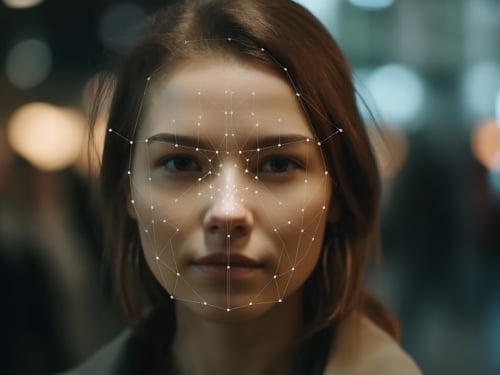
That question becomes even more important when meetings involve people who do not already know each other, such as a patient and clinician, a citizen and government representative, or participants in a legal hearing. The rise of AI-generated impersonation and deepfake technology adds another layer of complexity, making visual recognition alone an unreliable basis for trust. For secure communication, trust has to begin before the meeting starts. That means authentication, and it also means authorization through policy.
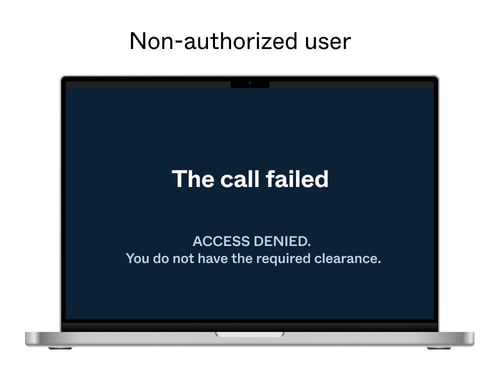
Pexip integrates with enterprise identity systems to help organizations verify users and apply existing security policies before access is granted.
Supported integrations include:
- SAML 2.0
- OpenID Connect (OIDC)
- LDAP
This allows organizations to enforce single sign-on (SSO), multi-factor authentication (MFA), role-based and attribute-based access control (RBAC/ABAC), while applying meeting policies based on identity, role, device, or network conditions. The policy layer gives organizations more granular control over who can join, what they can access, and how meetings are governed, which is especially important in regulated environments where access decisions cannot rely on identity alone.
For higher-security deployments, Pexip also supports certificate-based authentication and Public Key Infrastructure (PKI), often used in government and defense environments where passwords alone are not sufficient.
Availability is security too
Because if users cannot access the system when they need it, security becomes irrelevant.
- For a hospital, that may affect patient care.
- For a courtroom, it may delay proceedings.
- For defense teams, it may affect operations.
Pexip uses a distributed mesh architecture where conferencing nodes can be deployed across multiple geographic and logical zones. If one node becomes unavailable, traffic can be rerouted automatically without disrupting users. This architecture also supports zero trust security models by allowing organizations to define network boundaries, identity controls, and traffic policies inside their own infrastructure.
Pexip also supports dynamic scaling, allowing organizations to increase capacity during demand spikes without permanently overprovisioning infrastructure.
Auditability matters
In regulated environments, secure communication also requires accountability. Organizations may need to verify who joined a meeting, when they joined, and what administrative actions were taken.
This matters in legal environments, financial transactions, compliance workflows, and incident investigations. Pexip supports call detail records, administrative logs, and syslog integrations to help organizations maintain visibility and support audit requirements, giving them the ability to prove what happened.
Encrypted vs self-hosted video conferencing
Encryption is a security feature. Self-hosting is a security architecture.
Cloud-based meeting platforms can encrypt meetings while still managing the servers, metadata, and encryption keys. For many organizations, that model works well. For others, especially those handling highly sensitive communication, security requirements go further.
Self-hosted video conferencing gives organizations control over the infrastructure, policies, and data that shape their security posture. This approach adheres to the strictest risk management frameworks globally, including GDPR, NIST SP 800-37, ISO 27001, PCI DSS, and HIPAA.
That is why Pexip Infinity gives organizations flexible deployment options:
- Self-hosted
- Private cloud
- Customer-managed infrastructure
That flexibility allows organizations to maintain control over their infrastructure, access policies, metadata, auditing, integrations, and encryption key management.
Because some meetings are truly private. And when they are, control matters.
Frequently asked questions
Is video conferencing encrypted by default?
Does encryption make my video calls safe from hackers or intrusion?
Can video conferencing providers access encrypted meetings?
What is the most secure encryption for video conferencing?
Does end-to-end encryption affect recording?
First published: March 23, 2021
- Secure collaboration
- Secure Meetings