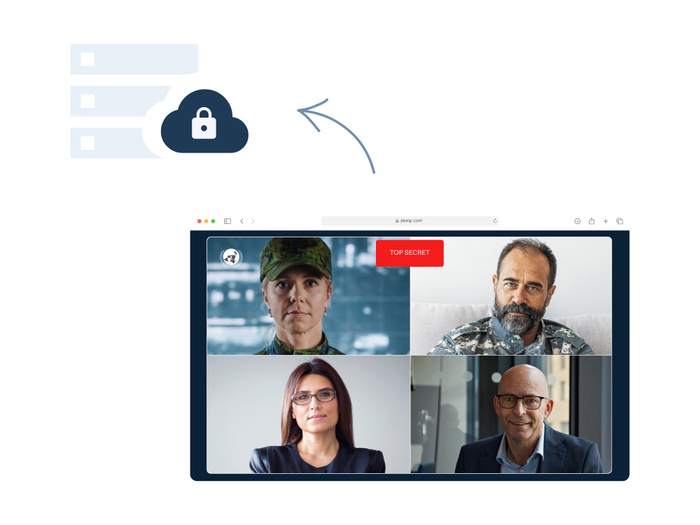
Defense is reaching the limits of what fixed networks and on-premises infrastructure can do.
Tomorrow’s operations will need cloud compute, based on different technologies, alongside established secure networks and infrastructure at the tactical edge.
NATO programs such as Public Business Network (PBN) and Operational Network Extension (ON-X) are clear indicators of a shift; both are major modernization programs by the NATO Communications and Information Agency (NCIA) to build scalable, secure-by-design, general-purpose cloud capabilities, including at NATO SECRET level. They will determine how cloud extends NATO’s business and operational capability while working with the networks and infrastructure already in place.
One mission, delivered from any environment
The operational reality is complex. Defense will operate across air-gapped networks, on-premises infrastructure, hybrid environments, tactical-edge deployments, and hyperscale cloud, often at the same time.
Workloads will sit at different classification levels and cross organizational and national boundaries. Some can move to cloud. Others will need to remain within tightly controlled local environments. These environments still need to work together, while allowing each organization to make its own risk-based decisions about how and where its services are delivered.
Video has to work across all of it
A commander working within a mission system may need to reach an Allied counterpart on another network, who may be using a different endpoint or operating within a sovereign environment. The underlying technology cannot become a barrier when a decision needs to be made.
Defense needs video that works no matter the technology or network on which it is deployed. It must connect people securely across environments while supporting the security and access controls within each one.
Pexip already provides secure collaboration within highly controlled defense environments. Our platform can support the full range of deployment models, including several at once. This allows organizations to adopt and exploit new infrastructure while keeping people connected across established operational networks.
NATO now faces cloud decisions
Defense organizations now face strategic investment and practical decisions about which workloads should move to cloud, which must remain controlled locally, and how people will communicate securely across them.
These decisions will shape NATO’s future operational capability and will be high on my agenda at NATO Edge 26 in İzmir this November.